
Learn to dance
Viennese Waltz
The original waltz: fast, whirling, and gloriously dizzy.
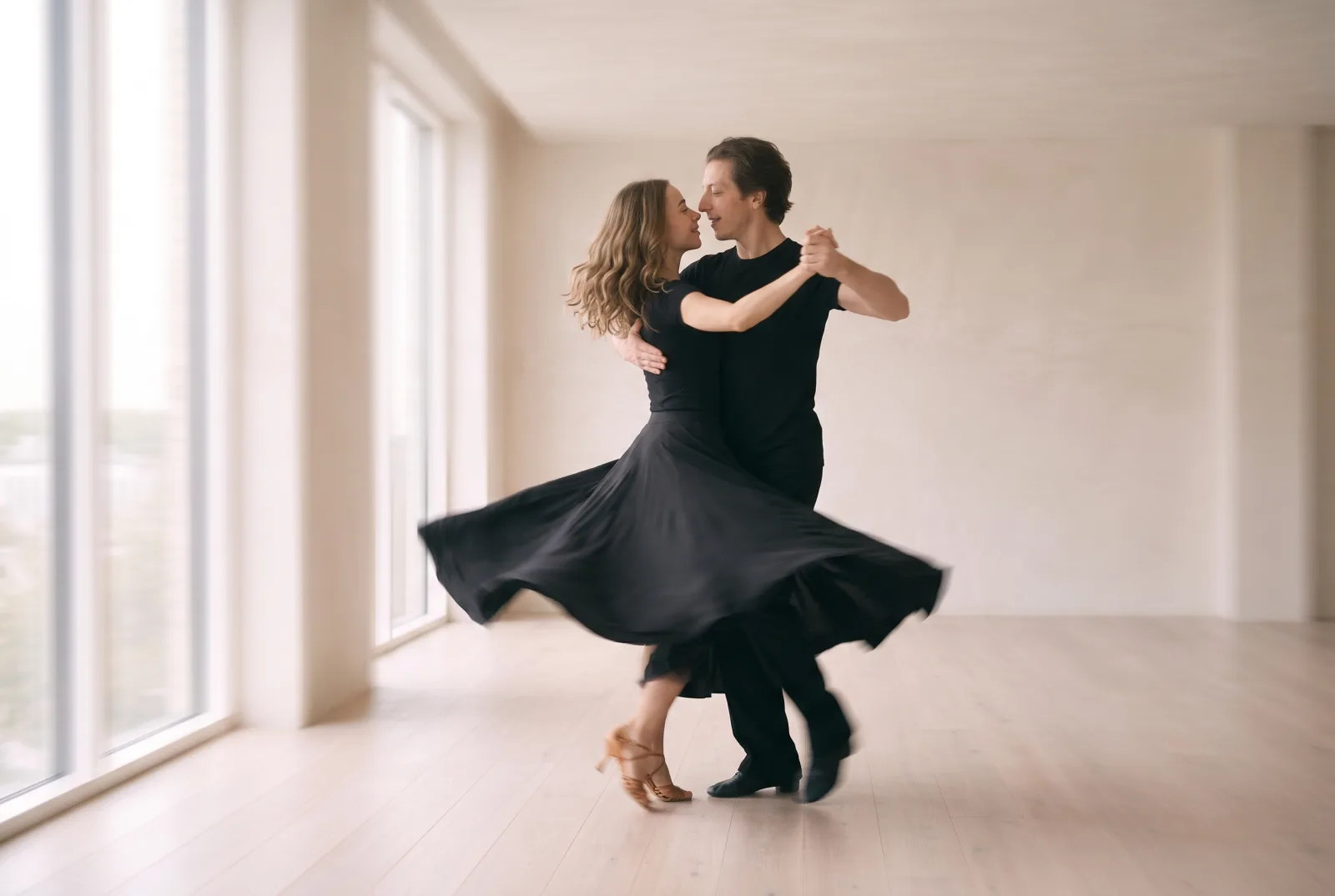
The Viennese waltz is the waltz as it began: fast, turning, and endlessly rotating around the room. It is danced in the same three-four time as the slow waltz but at nearly double the speed, so instead of gliding it whirls, the couple spinning through turn after turn as they sweep around the floor. It is the sound of a grand ballroom and a New Year's ball.
There are fewer figures to learn than in most ballroom dances, which sounds easy until you meet the speed and the constant rotation. The Viennese waltz is really about doing a small number of turns beautifully and continuously without getting dizzy or losing balance. Most people learn it after the slow waltz, because the timing and rise and fall are already familiar.
- Family
- Ballroom (smooth / standard)
- Timing
- 3/4 time, fast, counted 1-2-3
- Feel
- Fast, whirling, continuously turning
- Origins
- Central Europe, the original waltz
- Good first dance
- Best after the slow waltz
What makes a Viennese waltz a Viennese waltz
Speed and rotation. The Viennese waltz keeps the three-count timing and gentle rise and fall of the slow waltz but runs at nearly twice the tempo, and almost every step is part of a turn. The couple rotates continuously as they travel, which gives the dance its beautiful whirling look and its reputation for making beginners a little dizzy at first.
Because it moves so fast, the dance keeps only a handful of figures. The art is in dancing them smoothly and staying balanced through constant rotation, so the whirl looks effortless rather than frantic.
What you'll learn first
The heart of the dance is two figures: the natural turn, rotating right, and the reverse turn, rotating left, joined by simple change steps that let you switch between them. Learn those cleanly and you can already dance a real Viennese waltz around the room.
The bigger lesson is balance and control through continuous turning, plus the contra body movement that starts each rotation smoothly. Those are what keep the dance poised at speed instead of spinning out.
Is the Viennese waltz good for beginners?
It is best approached once you have a little dancing behind you, usually after the slow waltz, whose timing and rise and fall carry straight over. The Viennese waltz then adds just the speed and the turning.
It can absolutely be a first dance if you are keen, but be patient with the rotation, dizziness fades quickly with practice, and start well under tempo. Even experienced dancers rehearse the turns slowly before bringing them up to speed.
How to practise the Viennese waltz at home
Practise the turns slowly and in small amounts at first, both to learn the shape and to let your body get used to rotating. Keep your posture tall and your eyes calm, count a steady one-two-three, and use change steps to reset whenever you need to. A slow three-four track is perfect until the turns feel secure.
Rotation is genuinely hard to judge from the inside, so filming yourself or dancing for the YODS coach helps you see whether your turns are smooth and even. That outside view is the fastest way to make a whirling dance look calm.
Learn the viennese waltz with YODS
Video lessons that build the viennese waltz step by step, plus a live AI coach that watches you dance and gives feedback in the moment. Start with a free account.
Common questions about the viennese waltz
What is the difference between the waltz and the Viennese waltz?
They share three-four timing and rise and fall, but the Viennese waltz is danced at nearly twice the speed and is built almost entirely from continuous turns, while the slow waltz is more varied and gliding. Most people learn the slow waltz first.
Is the Viennese waltz hard to learn?
It uses only a few figures, which helps, but the speed and constant rotation make it demanding. Learned slowly and after the slow waltz, it is very achievable, and the dizziness passes quickly with practice.
Do I need a partner for the Viennese waltz?
No. You can learn the turns, timing, and balance on your own, and practising the rotation solo is a good way to get used to it. A partner helps later for dancing the turns in frame.
Dance terms