
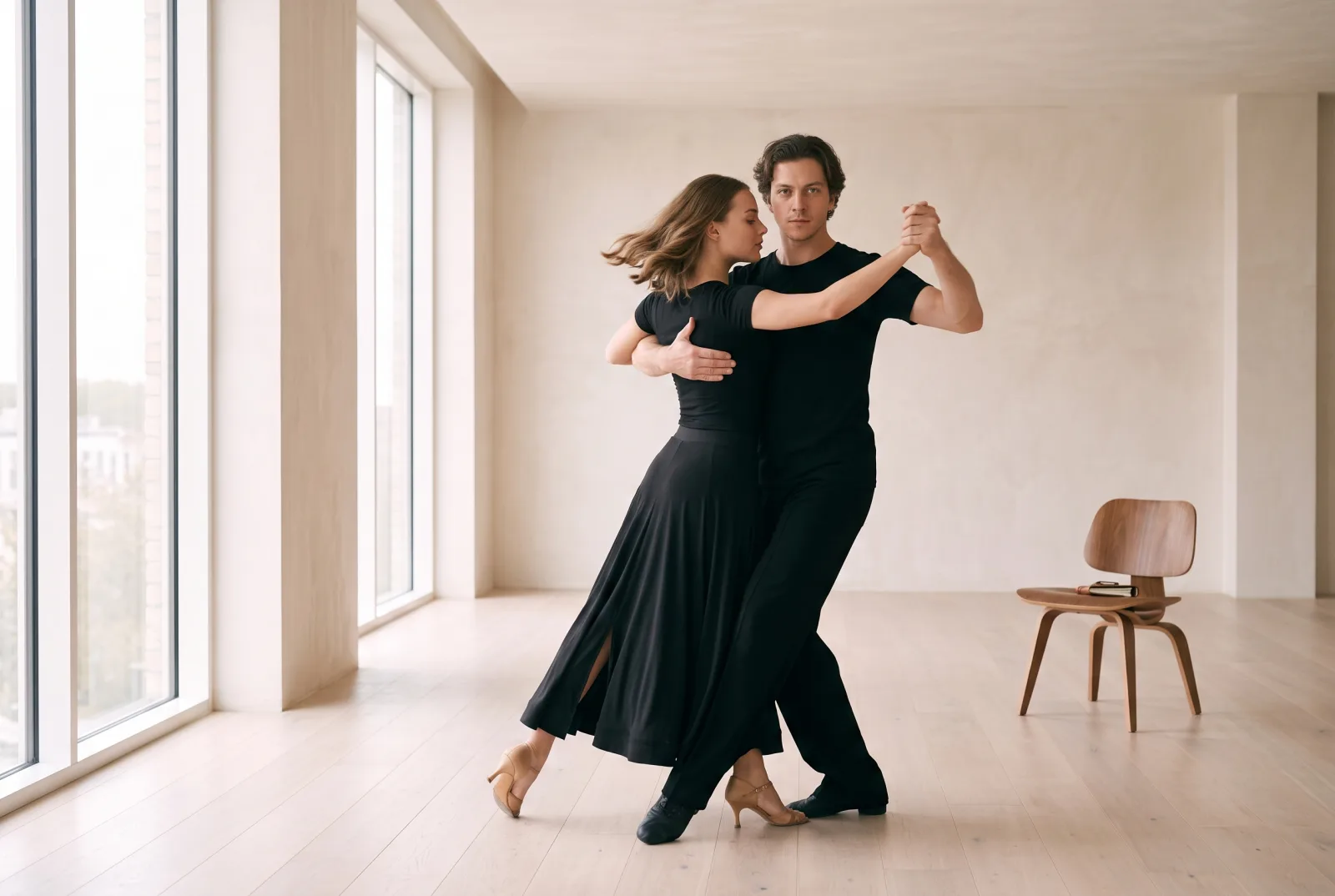
Learn to dance
Tango
The frame, the walk, and the turns that give tango its shape.
Tango is the ballroom dance with an edge. Where the waltz glides, the tango stalks: the movement is sharp and grounded, the walk is deliberate, and the couple holds a close, powerful frame that makes even a small step look like it means something. It is the dance people fall for because it feels dramatic without asking you to be athletic.
It began in the port neighbourhoods of Buenos Aires and Montevideo in the late 1800s and grew into two related worlds: the social, improvised Argentine tango and the crisper ballroom tango danced in studios and competitions. This guide is about learning the dance from the ground up, and the good news is that its most striking quality, that staccato attitude, is a habit you can build rather than a talent you need.
- Family
- Ballroom (with Argentine roots)
- Timing
- 2/4 time, slow and quick counts
- Feel
- Sharp, staccato, grounded
- Origins
- Buenos Aires and Montevideo, late 1800s
- Good first dance
- Yes, striking and approachable
What makes tango tango
The first thing you notice is that tango does not rise and fall. It stays low and level, travelling across the floor with a flat, prowling walk. The second is the contrast: long, smooth movements punctuated by sudden sharp ones, a quick close of the feet, a crisp turn of the head. That staccato accent is the flavour of the dance.
Holding it together is the frame. Tango uses a closer, more compact hold than the swing dances, and the couple stays connected through the body rather than the arms. It is that strong, quiet connection that lets the sharp movements land cleanly instead of looking jerky.
What you'll learn first
Almost everything in tango grows out of the walk, so that is where you start: a confident, grounded step that travels along the floor. Once the walk feels solid you add the basic figure and the promenade, where the couple opens to travel side by side, and then the sharper accents like the tap and the crisp closes that give tango its bite.
Underneath the figures you are really learning two things: how to keep a strong, close frame, and how to move sharply on purpose while staying in control. Those two habits are what separate a tango from just walking around the room.
Ballroom tango vs. Argentine tango
They share a root but feel different. Argentine tango is a social, improvised dance built on a close embrace and endless small variations, danced to whatever the couple feels in the music. Ballroom tango is more codified: a set frame, defined figures, and the sharp, projected style used in studios and competitions.
Neither is more correct, and skills cross over between them. If you are drawn to the dramatic, precise look, ballroom tango is a natural place to begin, and it gives you a vocabulary you can carry into the social dance later if you want to.
How to practise tango at home
Start with the walk, because it needs almost no space and it is the whole foundation. Walk slowly across a room staying low and level, feeling the floor with each step, and let your head and upper body stay quiet and strong. Then add the sharp accents in slow motion before bringing them up to tempo.
Tango music sits around 120 to 132 beats per minute, but practise underneath that speed first. A camera helps here more than a mirror, because you can watch back whether your movement really is sharp and grounded. Inside YODS you can dance for the coach and get feedback on your frame and attack while it is still fresh.
Learn the tango with YODS
Video lessons that build the tango step by step, plus a live AI coach that watches you dance and gives feedback in the moment. Start with a free account.
Common questions about the tango
Is tango hard to learn?
It is approachable to start and rewarding to refine. The basic walk is simple, and the dramatic look comes from attitude and a strong frame more than from difficult footwork. You can dance a recognisable tango early on.
What is the difference between ballroom and Argentine tango?
Argentine tango is a social, improvised dance in a close embrace, while ballroom tango uses a set frame and defined figures with a sharper, projected style. They share roots and skills transfer between them.
Do I need a partner for tango?
No. You can learn the walk, timing, frame, and the sharp accents on your own. A partner helps later for the close hold and for leading or following, but it is not required to begin.
Dance terms