
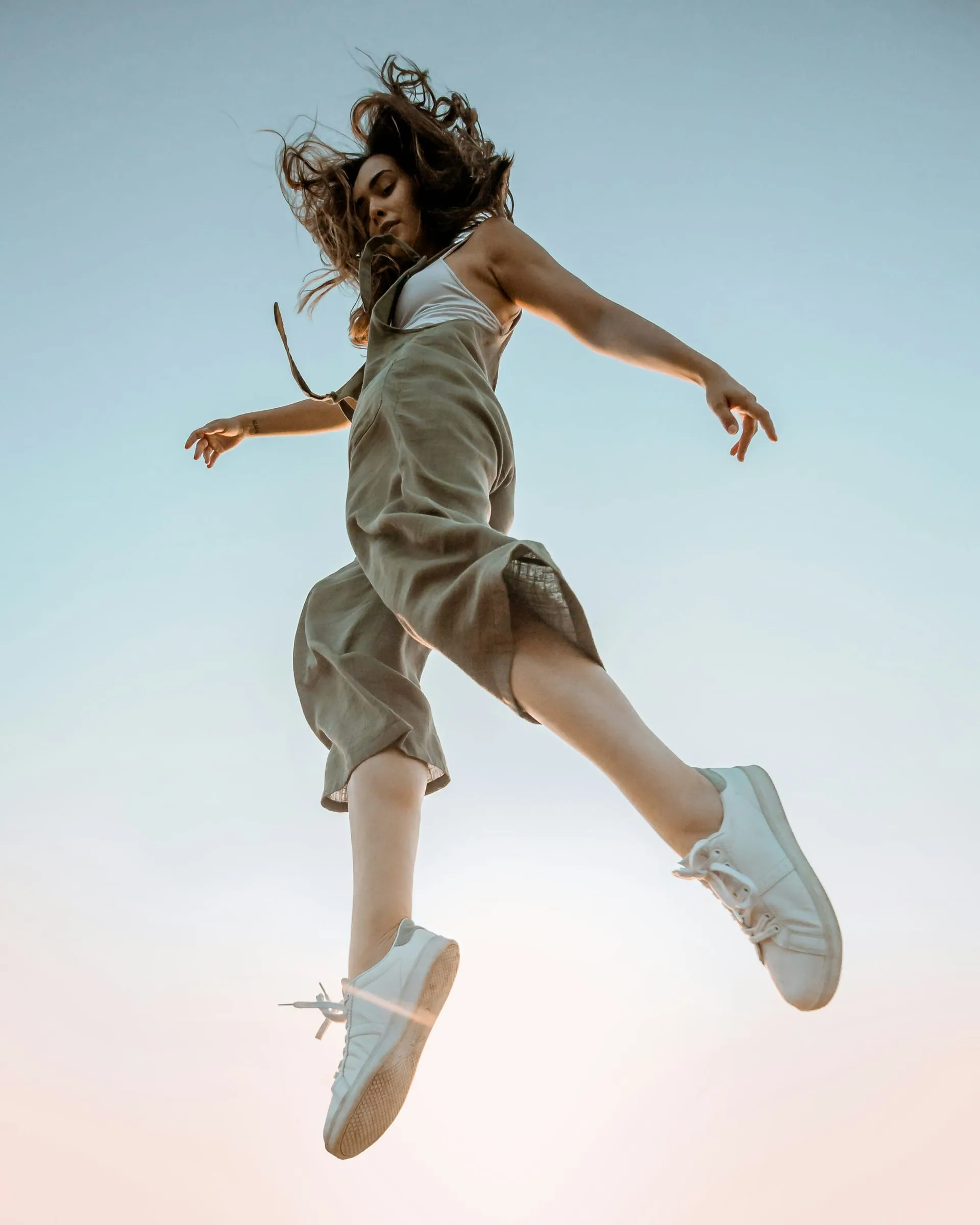
Your Own Dance: Where Growth Begins
Every dancer has something that exists before technique, choreography or the desire to perform a movement correctly: their own natural movement. At YODS, we call this your own dance.
Your own dance is your natural movement and the energy behind it. It is not a particular style, step or technique, and it is not something you consciously create. It is there when you simply allow yourself to be yourself, without trying to predetermine what the movement should become or what the end result should be. Instead of trying to make something happen, you experience the movement as it happens through your sensing body, in the present moment.
Your natural movement is never fixed; it is continuously moving, changing and renewing itself from moment to moment. Even when you are not consciously thinking about movement or trying to achieve a particular result, it is still there. In this sense, it exists beyond conscious intention and forms a fundamental part of who you are as a dancer.
At YODS, we see your own dance as the source of energy behind everything else in your dancing. Your physicality, mechanics and technique do not exist separately from this movement; they are experienced and developed through it. This is why allowing your own movement and its flow to grow is so important.
Dance is something we experience
Dance is not only something we do or something that can be seen from the outside. The actual experience of dancing happens in the sensing body, in the present moment. As your own movement flows through your body, it becomes something you can physically sense and experience.
This felt experience is an essential part of dancing. We can know what a movement should look like, understand its mechanics or have a clear idea of the technique we want to perform, but the dance itself is experienced through the body as it is happening. It is not an end result that we first create in our minds and then try to reproduce. It is a living experience that continues to change and renew itself from one moment to the next.
This is why the growth of flow and the felt experience of dance are inseparable. If the flow of your own dance is not allowed to expand, your physical experience of dancing cannot expand either. And because physicality, mechanics and dance-specific technique are experienced through that same sensing body, their development eventually becomes limited too.
The more of your own movement you allow to flow, the more movement and energy there is for you to sense, experience and develop.
You can't force your own dance to grow
One of the most important ideas behind your own dance is surprisingly simple: you cannot force it to grow. You can only allow it.
You don't need to try to create your own dance. In fact, when you try to manufacture it or decide in advance exactly what it should become, you may already begin to restrict what naturally wants to happen. The starting point is much simpler: to allow yourself to be yourself and experience your movement without needing to know exactly where it will lead.
Flow is not something you need to manufacture or add to your dancing either. It grows as you become aware of your own movement, stay present with it and allow it to continue. Rather than constantly asking your body to do something, you begin to sense and experience what is already happening within it.
As you allow more of your natural movement, its flow can grow. And as the flow grows, so does the possibility of experiencing more through your body.
When control becomes restriction
As dancers, we naturally want to improve. We want better technique, stronger mechanics, clearer timing and more beautiful movement. There is nothing wrong with wanting greater control of the body or wanting to perform something correctly.
But control can become limiting when it begins to restrict our natural movement. This can happen even with the best intentions. We may concentrate on producing a technically correct position, action or shape and achieve exactly the result we were looking for. But in doing so, we may also restrict some of the natural movement and energy available to us.
When less of our own movement is allowed to flow, there is also less energy available through which our physicality, mechanics and technique can be experienced and expressed. We may still be able to perform these elements, but we are doing so with less of the movement and energy that could otherwise be available to us. The result may look correct in isolation while the dancing as a whole becomes smaller, more effortful or more mechanical.
Technique is essential. But flow is what allows technique to come alive.
Technique gives us knowledge, structure and possibilities. Our own movement provides the energy through which those possibilities can be physically experienced and expressed.
Flow and technique are not opposites
At YODS, we don't see your own dance and dance technique as opposing ideas. Allowing your natural movement doesn't mean becoming passive, ignoring technique or simply doing whatever feels comfortable. The goal is not to choose between freedom and technique.
Instead, we explore what happens when technique is experienced through your own movement and your sensing body.
A Waltz still needs to feel like Waltz. A Rumba still needs its characteristic actions, timing and mechanics. Every dance has its own principles, forms and technical qualities, and learning them is an essential part of becoming a dancer. But rather than restricting your natural movement in order to produce those principles from the outside, we can experience what happens when your own movement is allowed to flow through them.
Technique then becomes something we experience through movement rather than something we impose on top of it. Your own dance doesn't replace technique. It provides the movement and energy through which technique can become part of a living dance.
Refining your dancing and growing your dancing are not the same thing
You can continue refining the dance you already have. You can make a movement cleaner, improve a technical detail or become more consistent at reproducing a particular action. These are valuable parts of training, but refinement and growth are not necessarily the same thing.
If the amount of natural movement you allow remains the same, you can become increasingly skilled at working within what is already available to you. Eventually, however, your development is limited by the amount of movement and energy you are allowing to flow.
For your dancing to genuinely expand, the flow of your own movement must also be allowed to expand. When more flow is allowed, there is more movement to sense and experience in the present moment. Your physical experience of dancing can become richer, and through that experience your physicality, mechanics and technique can continue to develop as well.
This is why we don't see flow as simply another quality to add to a dancer's technique. It is the underlying movement and energy through which the rest of the dance can continue to grow.
Allow more, rather than always doing more
Dance training often focuses on what we need to add: more technique, more strength, more information, more practice, more control. All of these can have an important place in a dancer's development. But sometimes growth asks something different from us: not always doing more, but allowing more.
Your own dance is already there. It is your natural movement. It exists beyond conscious intention and forms a fundamental part of who you are as a dancer. And because it is alive, it is never completely fixed. It continues to move, change and renew itself as you dance.
The exploration is not to decide beforehand what your dance should become, but to become aware of your own movement and experience it through your sensing body as it unfolds. You can learn to give it more space, restrict it less and discover what becomes possible when you don't need to control the outcome before you have experienced the movement itself.
If we want to continue developing as dancers, the first priority is therefore to allow our own movement — and the flow of that movement — to continue growing. As your flow grows, there is more movement to experience. As your experience grows, there is more for your body to discover. And through that continuously renewing experience, your physicality, mechanics, technique and ultimately your whole dance can continue to develop.