
· Minna
The Art of Dancing: What Is Artistry and How Can We Practise It?
Artistry in dance can mean so many different things, and I don't think there's just one way to define it. I've been thinking about what artistry means to me, both as a dancer and as someone who loves watching others dance.
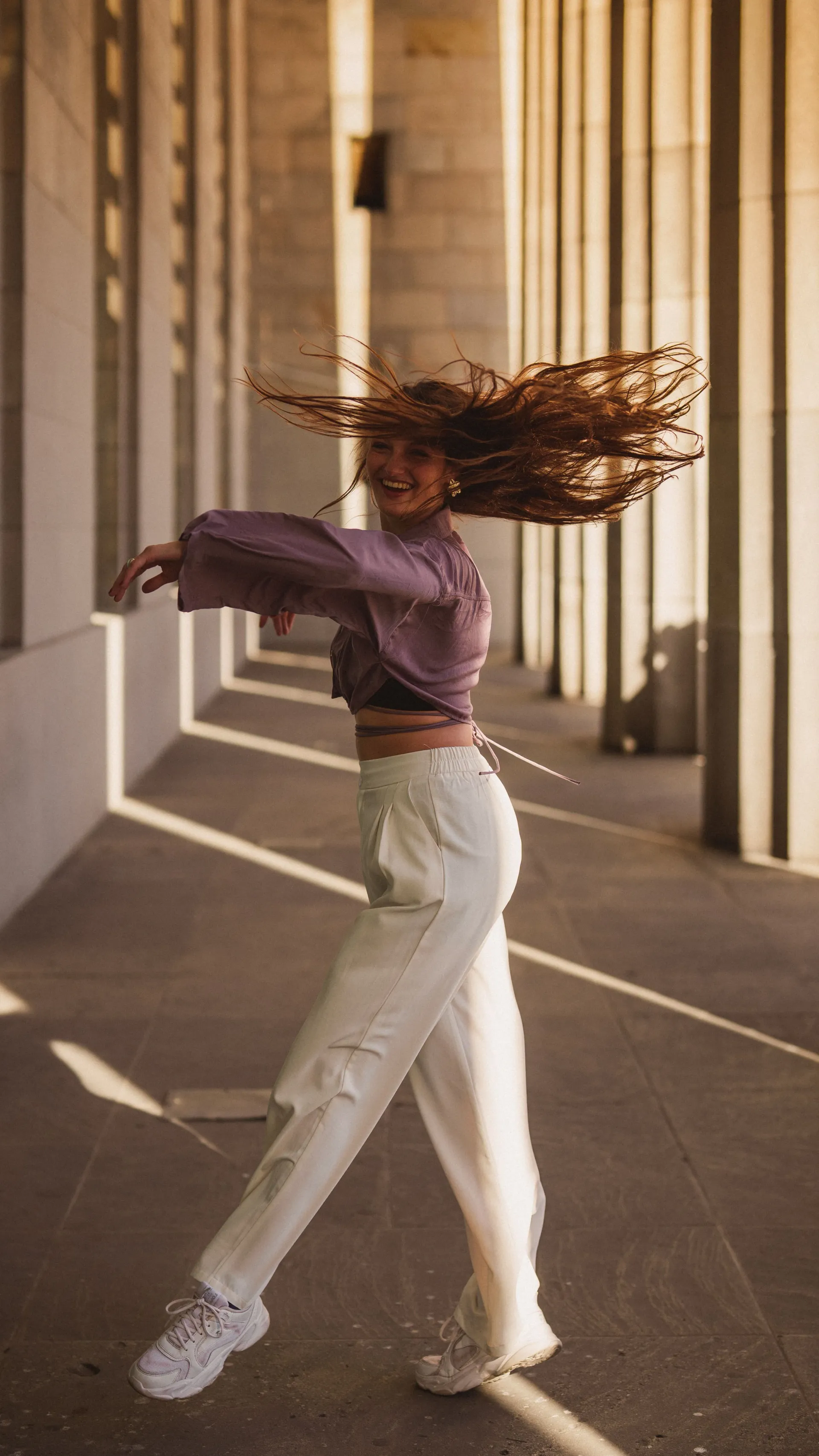
What makes some dancers so captivating to watch? For me, it's about authenticity and presence. Being open enough to show who you really are, rather than trying to play a role or become someone you think you should be. Being fully present in your own movement, connected to your partner and aware of the audience. There is something special about watching dancers who allow their own personality to come through, who are genuinely immersed in what they are doing and aren't afraid to let others see it.
But what does artistry actually mean in ballroom and Latin dancing? And can we consciously practise something that feels so personal?
Artistry is more than beautiful movement
In ballroom and Latin dancing, we spend countless hours developing technique. We work on posture, footwork, balance, timing, body movement and connection. There is always another detail to improve, and it's tempting to think that artistry will come naturally once our technique is good enough.
But two couples can dance exactly the same Waltz choreography with equally beautiful technique and create completely different experiences. One might make us feel the freedom of travelling through space, while another draws us into a more intimate interpretation of the music.
Artistry is closely connected to technique, but it also involves musicality, intention, personality and the ability to communicate through movement.
Something fascinating happens between dancers and their audience
Watching a beautiful dance performance can feel surprisingly personal. Sometimes we find ourselves holding our breath during a quiet moment or feeling the energy build as the dancers move together. We might not even be able to explain exactly why a particular performance stays with us.
I find this particularly fascinating in partner dancing, where we are constantly communicating through movement. The way we listen, respond and adapt to each other creates something that neither dancer could produce alone.
And there is also the relationship with the audience. Being present doesn't necessarily mean looking towards the spectators or consciously trying to entertain them. Sometimes the strongest connection comes from being so genuinely involved in the dancing that the audience feels invited into that moment.
Perhaps this is one reason why genuine connection can be so captivating to watch. We are witnessing something happening between two people, rather than simply watching two individuals perform choreography.
Can trying too hard get in the way of artistry?
There is an interesting contradiction in dance training. We spend years learning to control our bodies, yet some of our most expressive dancing seems to happen when we stop consciously controlling every detail.
Imagine dancing a Foxtrot while thinking about your shoulders, frame, feet, head position and timing. Now imagine dancing the same sequence while focusing on the feeling of travelling through space with your partner and responding to the music.
Of course, technical awareness is essential. But there is a difference between practising a technical detail and trying to consciously manage every detail while expressing yourself.
Perhaps artistry also requires learning to trust the skills we have developed.
How can we practise artistry?
One way is to become more curious about familiar movements.
Take a short piece of choreography and explore it in different ways. Dance it once with your attention entirely on the music. Notice the phrasing, the changes in energy and the moments where you might allow yourself more time.
Then dance it again, focusing on your partner. Pay attention to how you respond to each other, rather than simply completing the steps together.
You can also experiment with the character of the movement. What happens when you dance a Waltz with more softness, or explore greater contrast between stillness and action in Tango? How does your Rumba change when you allow yourself to take more time?
Another interesting experiment is to dance without a mirror. We spend so much time checking our posture, lines and positions that it's easy to become focused on how our dancing looks. Without that visual feedback, we have to rely more on what we feel.
How does the movement feel in your body? How do you experience the music? What do you notice in the connection with your partner?
You might discover qualities in your dancing that you hadn't noticed before.
Finding your own artistic voice
What I love about ballroom and Latin dancing is that we share a technical language, but we don't have to express ourselves in the same way.
Some dancers are naturally playful, others more intense or expressive. Some create beautiful moments through softness and subtlety, while others have an incredible ability to fill the floor with energy. And these qualities can change as we develop, gain experience and discover new sides of ourselves.
I think artistry grows when we become curious enough to explore beyond what we already know. When we dare to interpret the music differently, experiment with movement and allow our own personality to become part of the dancing.
And perhaps the most interesting thing about artistry is that we never really finish learning it. Our technique develops, our understanding of music changes, and the connection we create with different partners teaches us something new.
There will always be another way to experience the same movement, another detail to discover and another story to tell through our dancing.
With love,
Minna